
Public Square
Charlotte's Civic Conversation Series
The American Story: 250 Years of Democracy through Debate
Americans have always argued, debated, quibbled and disagreed.
Disagreement between figures like Alexander Hamilton and Thomas Jefferson over federal power and individual rights set the template for debates the country is still having today — an essential component to our democracy rather than a threat to it. Public Square brings that tradition to Charlotte, modeling the kind of civil discourse the current moment demands.
Brought to you through a generous partnership with the Morton and Durham Families

OUR VISION
To strengthen the civic fabric of our community through respectful conversations that foster learning, understanding, and engagement.
OUR MISSION
To model civil discourse and bridge divides by presenting disparate voices that challenge audience viewpoints, spark reflection, and build connection across ideological lines.
PUBLIC SQUARE INAUGURAL EVENT
Freedom and Responsibility: What We Owe Each Other
October 29, 2026
Carolina Theatre at Belk Place
Featuring
Moderator Carol Quillen and
Speakers John Hood and Melissa Murray
How do we balance individual liberty with our obligations to the broader community? This tension between personal freedom and collective well-being has shaped American politics since the beginning and remains at the heart of many of our most pressing debates.
General Admission: $35
Student Admission: $15
Ticket cost includes all Ticketmaster and facilities fees.
MODERATOR
Carol Quillen
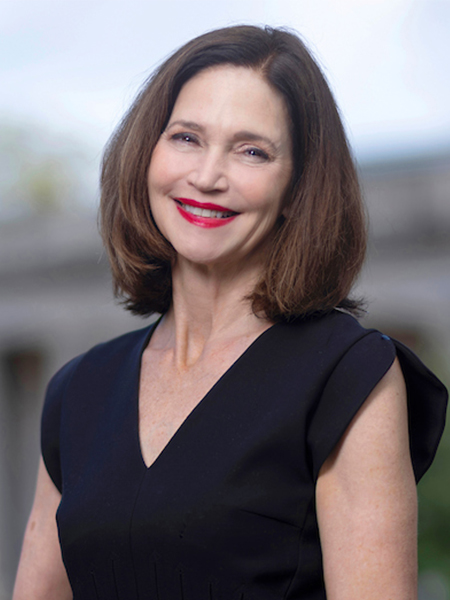
Carol Quillen served (2024-26) as the Chief Executive Officer of the National Trust for Historic Preservation, which activates the power of historic places to serve the public good. Since joining the National Trust, she has highlighted how preservation projects energize communities, support economic opportunity, and nurture civic engagement as she worked to safeguard our nation’s historic resources that can tell the full stories of all Americans.
Before joining the National Trust, Quillen served as president of Davidson College (2011-2022), where she focused on ensuring access and affordability, reimagining the liberal arts for today, and equipping graduates to lead in service of something larger than themselves. In 2022-23 she was a senior fellow at the Aspen Institute, and prior to Davidson she served Rice University as a professor and administrator.
Quillen was a founding member of the American Talent Initiative, which aims to graduate annually 50,000 additional low- and moderate-income students from top colleges. She co-chaired the NCAA’s Commission to Combat Campus Sexual Violence, served on President Obama’s Advisory Council on Financial Capability for Young Americans, has served on numerous non-profit boards including the boards of Howard University (2024-25) and Princeton University (2022-26).In 2026, she was elected to the American Academy of Arts and Sciences.
An historian, Quillen earned a BA from the University of Chicago and a PhD from Princeton.
POSITION 1:
INDIVIDUAL LIBERTY & PERSONAL RESPONSIBILITY
John Hood
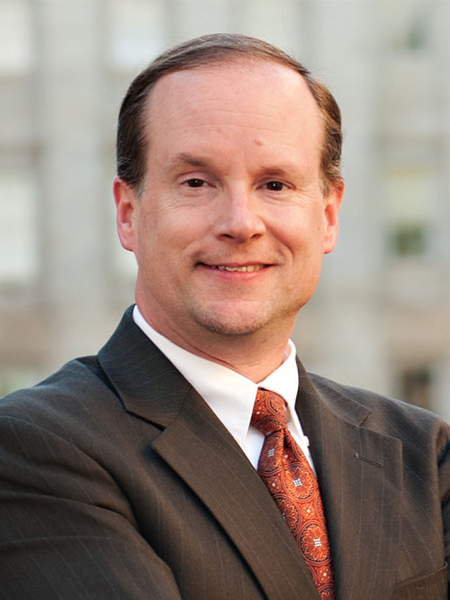
President, John William Pope Foundation
John Hood is president of the John William Pope Foundation, a Raleigh-based grantmaker. He is also the author of 10 books — ranging from economic histories and political biographies to fantasy novels — and teaches at Duke University’s Sanford School of Public Policy.
Since 1986, Hood has written a syndicated column that now runs in the Winston-Salem Journal, Greensboro News & Record, Wilmington Star-News, Triangle Business Journal, and newspapers in 50 other North Carolina communities. He’s also written for The Wall Street Journal, USA Today, National Review, Readers’ Digest, The New Republic, and dozens of other newspapers and magazines, and appeared on CNN, Fox News, NBC, and National Public Radio.
Hood chairs the North Carolina Institute of Public Leadership, co-chairs the North Carolina Leadership Forum, and serves as vice-chair of North Carolina Public Radio, State Policy Network, and the James G. Martin Center for Academic Renewal. He also co-founded the Freedom Conservatism project and formerly led the John Locke Foundation as its president for more than two decades. Other roles include lead faculty for the E.A. Morris Fellowship for Emerging Leaders and tap instructor at the Triangle Academy of Dance.
Hood received his B.A. in journalism from the University of North Carolina at Chapel Hill. He earned a M.A. in liberal studies from UNC-Greensboro.
POSITION 2:
COLLECTIVE INVESTMENT & TRUE FREEDOM
Melissa Murray
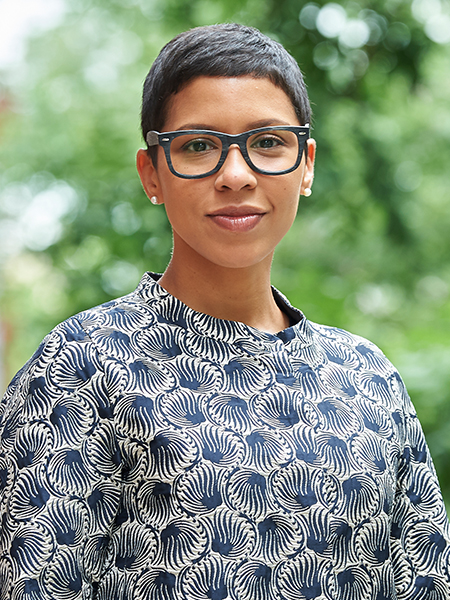
Frederick I. and Grace Stokes Professor of Law at NYU School of Law
Melissa Murray knows the transformational power of women’s rights and gender justice. As a leading scholar of constitutional law and reproductive rights and justice, she researches and writes about the structures, systems, and institutions that allow women to thrive—as well as those that stymie and limit women’s ambitions for themselves and their families.
The daughter of Jamaican immigrants, Melissa knows first-hand the importance of securing and expanding opportunities for women. She was just six years old when she realized that her literacy skills outstripped her grandmother’s. But even as Melissa recognized her grandmother’s limitations, she also saw her dogged determination to ensure that her daughters—and granddaughters—would have more opportunities. Raising chickens, selling eggs, and doing other home-based labor, Melissa’s grandmother made sure that all five of her daughters, including Melissa’s mother, completed high school and went on to have careers. With these powerful models of grit and determination, it is no wonder that Melissa went on to be one of the nation’s leading experts on women’s rights, reproductive rights and justice, and the United States Supreme Court.
The co-host of the popular Supreme Court podcast, Strict Scrutiny, and a legal analyst for MSNBC, Melissa’s talks explore the intersection of gender, race, and the law, and examines the role of legal institutions, including the Supreme Court, in entrenching and disrupting inequalities. An engaging and commanding speaker, Melissa challenges audiences to understand the ways in which gendered roles and expectations have long permeated—and continue to permeate— all aspects of our society, stymieing opportunities for gender justice, reproductive justice, and a more equal society.
Murray is the Frederick I. and Grace Stokes Professor of Law at the New York University School of Law, and Faculty Director of the Birnbaum Women’s Leadership Network. Previously, she was the Alexander F. and May T. Morrison Professor of Law and Interim Dean of Berkeley Law, the first Black woman to lead a top ten law school. Murray’s articles have appeared in leading law journals, including the Harvard Law Review, the Yale Law Journal, and the Columbia Law Review. Murray regularly appears in print and on television to comment on critical political and policy issues. She is a graduate of Yale Law School, where she was a member of the Yale Law Journal, and the University of Virginia, where she was a Jefferson Scholar and an Echols Scholar. Prior to entering academia, she served as a law clerk to the Hon. Sonia Sotomayor and the Hon. Stefan R. Underhill.
Her moving talks make clear the real-life stakes of our most pressing legal and political issues—for women and everyone else.
Conversation Series Goals
Promote Connection
This program is about bringing people together to engage deeply and thoughtfully with differing perspectives, rather than just shouting past each other. It's an opportunity for individuals to listen, reflect, and communicate more effectively.
Model Civil Civic Discourse
In an age where public discussions sometimes seem more combative than constructive, showcasing respectful, reasoned debate is critically important. This conversation series sets a standard for how we engage with each other on contentious topics.
Bridge Divides
Perhaps most importantly, fostering these conversations helps build understanding and empathy across differences. By humanizing the "other side," we begin to see complex issues in more nuanced ways and work toward common ground.